转译自世界黑白棋联盟
原文地址:https://www.worldothello.org/news/430/when-your-tournament-is-a-disaster
Written by Carlo Affatigato
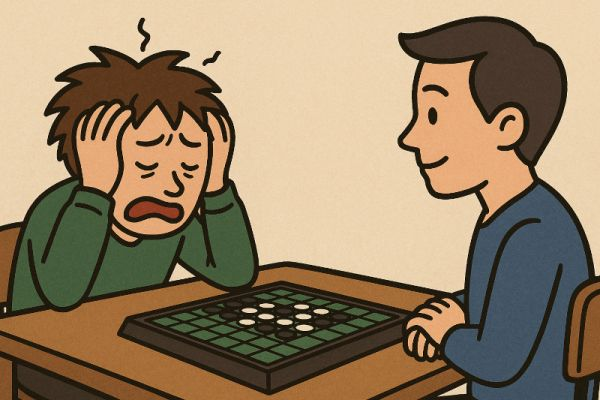
“This cannot happen.”
“It’s unacceptable.”
“这不可能发生。”
“这无法接受。”
And yet, it happens. And we’re forced to accept it. We have a fairly clear idea of our potential, of what a decent performance should look like before entering a tournament. Sure, anything can happen in a single game, but over a span of 7 to 10 games across a weekend, we generally know what kind of results we should expect. But then it happens: a weekend goes really, terribly wrong, and you can’t explain what happened. It can’t be just bad luck — bad luck might explain one, maybe two poor games, but not an entire tournament. When an entire weekend goes badly, there’s something more serious going on that needs to be understood.
然而,它确实发生了。而我们被迫接受它。在参加锦标赛之前,我们对自己的潜力、对什么是体面的表现,通常都有一个相当清晰的概念。当然,单场比赛什么情况都可能发生,但在一个周末的7到10场比赛中,我们大体上知道应该期待什么样的结果。但随后它发生了: 一个周末彻底地、可怕地搞砸了,而你无法解释到底发生了什么。 这不可能是纯粹的坏运气——坏运气或许能解释一场、甚至两场糟糕的比赛,但无法解释整个锦标赛。当整个周末都表现糟糕时,一定有更严重的原因需要我们去理解。
That happened to me last weekend, for the first time. I came home more disheartened than I’ve ever been since I started playing Othello. And it didn’t help when people told me: “maybe you were just tired.” I’m usually good at managing fatigue. That can’t be it. I feel the need to find a more practical explanation, something I can work on. So, after a few natural days of discouragement, I had to do the only thing you can do in these cases: rationalize.
上个周末,这种事第一次发生在我身上。我回到家时,比开始玩黑白棋以来的任何时候都要沮丧。当人们告诉我:“也许你只是累了”时,这于事无补。我通常很擅长管理疲劳。这不可能是原因。我感到需要找到一个更实际的解释,一些我可以努力改进的东西。所以,在经历了几天自然的沮丧之后,我不得不做在这种情况下唯一能做的事:理性分析。
# Yes, it happens… /是的,它会发生…
First, a simple observation: it happens to everyone. Talk to other players, and almost all of them will have a story to tell — a tournament that hit them harder than usual, without a convincing explanation. Tom Schotte, at the end of the 2023 World Championship, was “ready to retire” (his own words): after nine rounds he had six points and was 11th overall, but then he lost four straight games on the second day — all to lower-rated opponents. He finished the championship in 53rd place and was visibly shaken (I was there, I still remember the look on his face). Piamrat Kraikokit still remembers the disappointment from the 2007 World Championship, when everyone expected him to do better than the year before — and instead he scored lower than expected. Ask around: everyone has a story.
首先,一个简单的结论:这种事会发生在每个人身上。和其他玩家聊聊,几乎所有人都会有一段故事可讲——一次比往常打击更重的锦标赛,却没有令人信服的解释。Tom Schotte在2023年世界锦标赛结束时“准备退役”(他自己的原话):前九轮他得了六分,总排名第11位,但在第二天他连输四场——全是输给了评分较低的对手。他以第53名结束了锦标赛,明显受到了打击(我当时在场,至今仍记得他脸上的表情)。Piamrat Kraikokit至今仍记得2007年世界锦标赛的失望,当时所有人都期待他比前一年表现更好——结果他的得分却低于预期。四处问问:每个人都有故事。
Bad luck has nothing to do with it. You can definitely blame a lack of focus, and there are many possible reasons for that: fatigue, yes, or maybe a not-so-great state of health, or mental distractions. There are a lot of factors that can cause your brain’s performance to fluctuate at any given time. And — pay attention to this — these fluctuations are far larger than most people think. Not just in live tournaments, but even online. Look at the chart of my recent online rating, below.
坏运气与此无关。 你当然可以归咎于专注力的缺乏,而这背后可能有很多原因:是的,可能是疲劳,或者身体状态不佳,或者精神上的干扰。有很多因素会在特定时刻导致你大脑的表现出现波动。而且——请注意这一点——这些波动的幅度远比大多数人想象的要大。不仅是在线下锦标赛中,甚至在线上也是如此。看看下面我近期线上评分的图表。
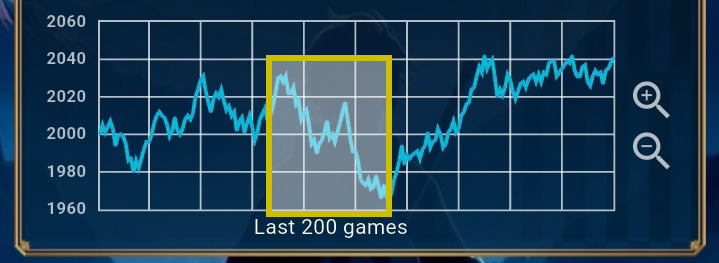
That drop in the middle box coincided with a seasonal flu. I often played with a fever, and this was the result. The brief climbs were the times of day when the fever had gone down thanks to meds, then the fever returned, and the rating dropped even more.
中间方框中的下跌正好赶上了一次季节性流感。我经常发着烧下棋,这就是结果。短暂的爬升是药物让烧退下去的时段,然后发烧又回来了,评分跌得更厉害。
(“Ok, but why are you playing Othello with a fever??”
“Because I don’t really care about my rating!”
“Yeah, and then you write lengthy articles about it when something goes wrong.”
“I want to speak to my lawyer!”)
(“好吧,但你为什么发着烧还要下黑白棋??”
“因为我真的不在乎我的评分!”
“是啊,然后出问题的时候你又写了长篇大论的文章。”
“我要找我的律师!”)
Some quick math: if my rating dropped by 70 points in two days, with a decline that showed no signs of stopping, it means that when I’m healthy I play at around 2000–2050, and when I’m sick, I probably play at… 1900, maybe lower. The rating drops so fast because it tries to adjust quickly to my actual performance level, right?
快速计算一下: 如果我的评分在两天内下降了70分,且下跌趋势毫无停止的迹象,这意味着当我健康时,我的水平大约是2000-2050分,而当我生病时,我的水平可能只有…1900分,甚至更低。评分下降得如此之快,是因为它试图迅速调整到我实际的表现水平,对吧?
Illnesses, disorientation, lack of sleep, fatigue, environmental distractions — all these can make a difference in performance like we were 100+ rating points lower. And there can be other reasons: in the case of my tournament last weekend, I have an even stranger theory, but I’ll save it for the end.
疾病、方向感迷失、睡眠不足、疲劳、环境干扰——所有这些都可能使你的表现水平下降,仿佛你低了100多分。还可能有其他原因:就我上个周末的锦标赛而言,我有一个更奇怪的理论,但我会留到最后再说
# … but how often? /但它发生的频率有多高
Let’s add another piece to the puzzle: statistics.
让我们给这个谜题再加一块拼图:统计数据。
Even when we’re in a perfectly normal mental state, the chance of losing to a player who’s 50–100 rating points lower than us is around 40%. With a 150-point gap, it’s about 30%. This is based on the Elo formula — [check it out here] if you want to dig deeper.
即使我们处于完全正常的精神状态,输给一个评分比我们低50-100分的玩家的概率大约是40%。如果分差达到150分,这个概率大约是30%。这是基于Elo公式得出的——如果你想深入了解,可以[在这里查看]。
In a typical tournament, across a weekend, let’s say you’ll play at least 7 games against players in that range. You play seven games where you have an average 30% chance of losing. What are the odds that you win all of them? Or lose one or two?
在一个典型的周末锦标赛中,假设你至少要打7场与这个评分段玩家的比赛。你打了七场比赛,平均每场你有30%的几率会输。那么,你赢下全部七场的几率是多少?或者输掉一场或两场?
With a 30% average chance of losing, the probability of winning seven games out of seven is 8.23%
(70% ^7 — shocking, right?)
以平均30%的输率计算,**赢下七场全胜的概率是 8.23%**
(70% ^7 — 很震惊,对吧?)
>The probability of winning at least six is less than 33%. That means there’s a 67% chance you’ll lose at least two games, and a 35% chance you’ll lose three or more. For the stat lovers out there, this is the binomial distribution — [have fun with the math].
赢下至少六场的概率不到33%。 这意味着你有67%的几率会至少输掉两场比赛,有35%的几率会输掉三场或更多。对于统计爱好者来说,这就是二项分布(binomial distribution)——[去算着玩吧]。
>In other words, even if you’re playing at your normal strength, it’s almost guaranteed that you’ll lose at least once to a lower-rated opponent. Probably even twice. There’s nothing to explain when it happens. It’s pure statistics.
换句话说,即使你以正常实力发挥,你也几乎注定会至少输给一个评分较低的对手一次。 很可能甚至是两次。当这种情况发生时,没什么需要解释的。这就是纯粹的统计概率。
# And how much does it weigh on our perception? /这对我们的感知有多大影响?
Now let’s bring in the psychological side. According to the loss aversion concept introduced by Daniel Kahneman and Amos Tversky in 1979, a loss feels twice as painful as an equally sized win feels good. To compensate for the psychological sting of a loss, our mind needs at least two wins of equal magnitude. Read their [Prospect Theory] — it’s one of those things that can genuinely change your life.
现在让我们引入心理层面。根据Daniel Kahneman和Amos Tversky在1979年提出的损失厌恶(loss aversion) 概念,一次失败带来的痛苦感,是同等规模胜利带来的愉悦感的两倍。为了补偿一次失败带来的心理刺痛,我们的头脑至少需要两次同等规模的胜利。去读读他们的[前景理论(Prospect Theory)]()——这是那些能真正改变你人生的东西之一。
Our brain is simply hypersensitive to what we perceive as failures. They bring us down much more than equivalent successes lift us up.
我们的大脑对我们感知为失败的事情极度敏感。它们带来的打击,远比同等的成功带来的提升要大得多。
Now let’s combine all of this with what typically happens in a tournament. As we saw earlier, if we play seven games against players we think we “should beat,” and we have a 67% chance of losing at least two, we’re already at risk of feeling very disappointed. If we lose three out of seven, it’s over — the wins won’t be enough to cancel out the emotional hit of the losses. If we lose two and then we add the psychological burden of the losses against higher-rated players (which almost certainly happen), it becomes harder and harder to leave the tournament feeling satisfied. Being disappointed after a tournament is basically a certainty.
现在,让我们把这一切与锦标赛中通常发生的情况结合起来。正如我们之前看到的,如果我们打了七场我们觉得“应该赢”的比赛,而我们又有67%的几率至少输掉两场,我们已经有感到非常失望的风险了。如果我们七场输了三场,那就完了——胜利不足以抵消失败带来的情感冲击。如果我们输了两场,再加上输给评分更高的玩家(这几乎肯定也会发生)带来的心理负担,想要带着满足感离开锦标赛就变得越来越难。在锦标赛后感到失望基本上是必然的。
# Conclusion /结论
A very long article, filled with math and psychology (sorry, that’s what happens when you try to rationalize), all to make a simple point:
Feeling like a tournament was a disaster is more common than we think. You’ve probably experienced it yourself. And you’ve also probably been on the other side, witnessing other players’ frustration — or even anger — when you outperformed them. You’ve seen [Magnus Carlsen’s viral] reaction after his loss some weeks ago, haven’t you?
一篇非常长的文章,充满了数学和心理学(抱歉,当你试图理性分析时就会这样),都是为了说明一个简单的道理:
感觉一场锦标赛是场灾难,比我们想象的要普遍得多。 你自己可能也经历过。你也可能站在另一边,目睹过其他玩家在你战胜他们时的沮丧——甚至是愤怒。你看到过几周前[Magnus Carlsen(国际象棋世界冠军)输棋]后的那个病毒式传播的反应,对吧?
So what should we do? The first and obvious answer: don’t let it crush you. Wait some days, get back on the board, focus harder, and the satisfying results will come. Alongside that, the mental trick to avoid letting the disappointment drag us down too far is to fight the weight our mind assigns to a few losses. And typically, we’re quite good at that. At “making excuses.” “I ate too much.” “I didn’t sleep well.” “The lighting wasn’t right.” (yes, I really heard that one). We even joked about it when we talked about the funniest moments of W.O.C. 2023. If there’s one thing we need to master, it’s finding acceptable explanations for our losses — just enough to keep us from being too discouraged.
那么我们应该怎么做?第一个也是显而易见的答案:不要让它击垮你*。 等几天,重新回到棋盘前,更加专注,满意的结果会到来的。除此之外,避免失望情绪把我们拖得太深的一个心理技巧,就是对抗我们头脑赋予几次失败的沉重感。而通常,我们很擅长这个。擅长“找借口”。“我吃太多了。”“我睡不好。”“灯光不合适。”(是的,我真的听过这个)。我们在谈论[2023年世界黑白棋锦标赛(W.O.C. 2023)最有趣时刻]时还拿这个开过玩笑。如果说有一件事我们需要掌握的,那就是为我们的失败找到可以接受的解释——只要能让我们不至于太过气馁就行。
As for me, I’ve found my explanation for last weekend’s tournament: I didn’t eat enough sweets. And at the next tournament, I’m bringing a spoon and a jar of jam. Yes, I know it’s weird. No, I don’t want to talk about it.
至于我,我已经为上个周末的锦标赛找到了我的解释:我糖吃得太少了。 下次锦标赛,我要带一个勺子和一罐果酱。是的,我知道这很怪。不,我不想讨论这个。
