转译自世界黑白棋联盟
原文地址:https://www.worldothello.org/news/460/tilt-queuing-why-can-t-we-stop-playing-when-we-play-badly
Written by Carlo Affatigato
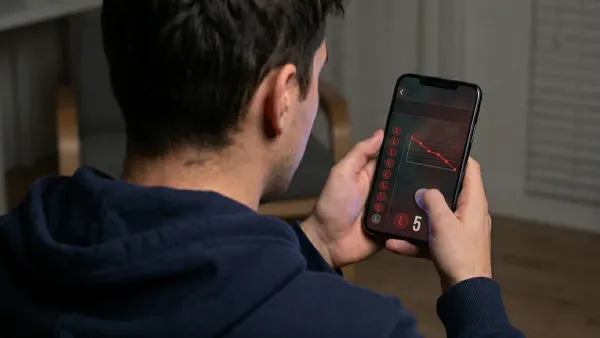
You know those days when a couple of online games go completely sideways, leaving you with that deep frustration and a desperate urge to make things right? You end up trapped in an endless loop of rapid-fire matches where, obviously, you’re playing without a shred of focus, ending up burning through 100 to 150 points of your online rating. Sometimes this phase drags on for days: you wake up the next morning with a bitter taste in your mouth and a craving for revenge, and if those first few games go poorly again (maybe because you barely slept after the mental exhaustion of the previous day), the losing streak restarts.
你肯定有过那种日子:几局线上游戏打得一塌糊涂,留给你深深的挫败感,以及一股迫切想要扭转局面的冲动。你最终陷入一场又一场快节奏对局的无限循环,而显然,此时你毫无专注力可言,最后白白烧掉线上积分一百分到一百五十分。有时候,这个阶段一拖就是好几天:第二天早上醒来,你嘴里发苦,满脑子都是复仇的渴望,而如果最初几局又打得很烂(也许是因为前一天的脑力透支让你几乎没怎么睡),连败就会重新启动。
It’s happened to all of us at least once. In reality, it’s a pretty well-known phenomenon, especially in the world of online gaming. It’s called tilt queuing, and it is the hidden byproduct of a very specific mental state we slip into in those moments.
这至少在我们每个人身上都发生过一次。事实上,这是个相当有名的现象,尤其在线上游戏圈。它被称为输到上头(tilt queuing),是我们在那些时刻滑入的一种非常特定心理状态所产生的隐秘副产品。
大脑中的小故障:出问题时发生了什么/The Glitch in Our Brain: What Happens When Things Go Wrong
You take a quick break and queue up for an online game. The match ends, and you’re completely unsatisfied: for some reason, you missed something you absolutely should have seen, or the game just fell apart into a desperate mess without any clear reason. If your mind is sharp, you can just shrug it off and refuse to let a single loss drag you down. But then maybe you play two more, and as luck would have it, the cycle repeats.
你稍作休息,排了一局线上游戏。对局结束,你完全不满意:出于某种原因,你漏掉了本绝不该漏掉的东西,或是这局游戏莫名其妙地崩成了一场毫无头绪的烂摊子。如果你头脑清醒,大可以一笑了之,不让区区一败拖垮你。但接着你可能又玩了两局,恰巧霉运循环重演。
After a while, staying clear-headed becomes impossible. It’s pure biology: your body is heading straight into what is scientifically known as a dopamine crash. Your dopamine levels plummet, and your mind goes into a panic. We’ve just experienced a massive wave of dissatisfaction, and our brain now feels an urgent need to find something (anything!) that will give us an immediate spike to help us forget what happened. And since we’re probably using one of those gaming apps with automatic matchmaking, it’s pure instinct to hit “play again” a second later, hoping our luck will turn.
过不了多久,保持头脑清醒就变得不可能了。这纯粹是生理反应:你的身体正直接进入科学上所谓的多巴胺骤降。你的多巴胺水平暴跌,大脑陷入恐慌。我们刚刚经历了一大波不满意,大脑此刻感到迫切需要找到点什么——什么都行!——能带来即时的快感飙升,帮我们忘掉刚才发生的一切。而我们大概正在用某款带自动匹配功能的游戏应用,于是出于纯粹的本能,一秒后就点了“再来一局”,指望运气能好转。
For many, the frustration comes simply from watching their online rating tank. For others (and I personally fall into this camp), the rating doesn’t matter all that much: the real issue is the necessity of finding your brilliance again. You feel this desperate need to hit that one game that ends with the feeling that you’ve rediscovered “your touch.” But you can already see the problem here: we are chasing a satisfying performance at the exact moment our brain has completely lost its focus. Because—Murphy’s Law—by the time we are twenty matches deep into tilt queueing, our actual capacity to concentrate is completely shot. Another direct side effect of the dopamine crash.
对很多人来说,挫败感仅仅来自看着自己的线上积分往下掉。而对另一些人(我个人就属于这一类),积分其实没那么要紧:真正的问题在于,你非得找回自己的闪光点不可。你感到这种绝望的需求,非得一局游戏结束后,让你有种“手感又回来了”的感觉才肯罢休。但你在此处就能看出问题:我们是在大脑完全丧失专注力的精确时刻,追逐一场满意的表现。因为——墨菲定律作祟——等我们上头连排二十局之后,实际集中注意力的能力已经彻底崩了。这是多巴胺骤降的另一个直接副作用。
The result is that we end up playing that long streak of games using only one half of our reasoning. Remember when we talked about the two mental approaches we use when playing Othello? We labeled them the “positional approach” and the “predictive approach,” which are really just the difference between “playing on instinct” and “calculating every single continuation with the maximum depth we are capable of.” Well, when we are tilt queueing, our calculating half is completely gone. We are playing purely based on memory, patterns, and instinctive moves—which is basically our default autopilot gameplay when the brain isn’t in the right condition for complex thoughts.
结果就是,我们在那漫长连排中,仅用一半的推理能力在打。还记得我们聊过下黑白棋时的两种思维模式吗?我们称其为“局面式方法”和“预测式方法”,其实就是“凭直觉打”和“以我们最大可能的深度计算每一条后续变化”之间的区别。那么,当我们输到上头时,我们负责计算的那一半能力彻底消失了。我们纯粹是在依靠记忆、模式与本能反应在下棋——这基本就是我们大脑状态不适合复杂思考时,默认的自动巡航玩法。
There is a deep irony in all of this: when we play well and feel satisfied, we typically stop after one or two games, meaning that when our rating goes up, it climbs very slowly. But when we play badly… that’s when we end up playing 40 games straight, right during our absolute worst mental state. And weeks of progress get wiped out in a couple of hours.
这其中有种深深的讽刺:当我们状态出色、感到满意时,通常打一两盘就停了,也就是说,我们的积分上涨时,攀升得非常缓慢。可当我们打得差劲时……那偏偏就是我们一连狂打四十局的时刻,恰好处于我们心智状态最差的时候。于是几周积攒的进步,几个小时内就被抹掉了。
本可能更糟:一些好消息/It Could Have Been Much Worse: Some Good News
The phenomenon of tilt queueing is so common that online gaming communities have been discussing it for years. In the chess world, for instance, Chessbio tried to break down the phenomenon in this article, offering tips on how to keep it from happening. On the internet, there is also plenty of video content or Reddit threads dedicated to the topic.
输到上头现象太过常见,以至于线上游戏社区讨论它已有多年。比如在国际象棋界,Chessbio 曾在这篇文章中尝试剖析该现象,并给出防止其发生的建议。网上也有大量视频或 Reddit 讨论串探讨这个话题。
But looking past the immediate frustration, is tilt queueing really that catastrophic? Honestly, there’s no need to be so dramatic. First of all, there’s a massive reason to be grateful: this exact same psychological trap happens—much more frequently, in fact—in gambling circles like poker, and when it strikes there, it’s incredibly easy to lose a fortune. Anyone with a bit of experience in the world of finance and investing has probably noticed it happens there too: if you hit a bad investment, you get hit with this sudden, powerful urge to find an immediate alternative to make “big money fast” and recoup your losses. But as you can imagine, that is the absolute perfect mindset for getting sucked into even worse investments. In both cases, whether in poker or when investing your hard-earned savings, acting while your mind is on tilt risks ruining you. In Othello, the absolute worst thing that can happen to you is losing 200 rating points in a single day. And ratings don’t really mean anything, right?
但抛开眼前的挫败感,输到上头真就那么灾难吗?说实话,没必要那么夸张。首先,有一个巨大的理由值得庆幸:完全相同的心理陷阱在扑克等赌博圈里发生的频率其实更高,而一旦在那里发作,倾家荡产是分分钟的事。任何有点金融投资经验的人,大概也已注意到它在那里也会出现:如果你做了一笔糟糕的投资,会被一股突然而强烈的冲动击中,想立刻找到另一个“快速赚大钱”的替代办法来弥补损失。但不难想象,这种心态绝对是让人卷入更烂投资的最完美状态。无论哪种情况,玩扑克还是拿血汗钱去投资,在心态上头时行动,都有毁掉你的风险。而在黑白棋里,一天之内可能发生的最坏情况,不过是掉两百分。况且积分根本不代表什么,对吧?
Beyond that, there’s another aspect worth highlighting that can genuinely cheer us up. When we play all those games while our brain is stuck in default mode, we are actually “testing our floor.”
除此之外,还有另一面值得说道,能真正让我们高兴起来。当我们大脑卡在默认模式下打那所有的对局时,实际上我们是在 “测试自己的下限”。
In the spectrum of mental clarity we can bring to a game of Othello, the absolute highest peak—the ceiling—is what we bring to life during our best tournaments, maybe after we’ve engineered our nutrition to absolute perfection, right? Well, the very bottom of that range is the “instant, gut-reaction gameplay” we fall back on when we tilt queue. And to be perfectly honest, lifting our floor is just as important—if not more so—than refining our ceiling. In some ways, it can be even more effective: our ceiling actually faces a hard limit dictated by our natural talent, whereas our floor has massive room for upward growth.
拿我们下黑白棋时所能带入的头脑清晰度光谱来看,那个绝对的顶峰——天花板——是我们状态最佳的锦标赛期间打出的水平,比如也许我们把自己的营养调理到了极致,对吧?那么,那个范围的最底端,就是我们输到上头时退守的那种“瞬间、直觉反应玩法”。坦白讲,抬高我们的下限,与打磨我们的上限同等重要——甚至可能更重要。在某些方面,它甚至更有效:我们的上限实际上受天资所限,存在硬性上限,而下限则拥有巨大的上升空间。
打磨我们的直觉/Refining Our Instinct
Okay, but what does it actually mean to improve your floor? It means expanding the toolkit we rely on when our brain is physically incapable of deep, complex thinking. In Othello, this comes down to two main things: memorized sequences and pattern recognition.
好吧,但提升下限到底意味着什么?这意味着扩展我们在大脑身体上无法进行深度复杂思考时所依赖的工具箱。在黑白棋中,这主要归结为两点:记忆中的序列 与 模式识别。
When you play 50 (or 200) games straight in full tilt queue mode, you are actually accumulating an immense mountain of case studies to refine those two exact skills. We can make great use of those painful sessions where our rating plummets tragically: we can review every single one of those losses to see, for example, just how early we fell out of book, and spend a few minutes trying to expand our memorized openings. That way, next time, we’ll be able to play one or two more good moves without having to resort to heavy, exhausting hard thinking. The same goes for pattern recognition: often, the right move in the midgame or endgame can be found through “typical sequences” that apply to very specific structures or areas of the board. When our capacity for deep calculation is totally drained, it would be incredibly helpful if those moves simply jumped out at our eyes by pure instinct. Obviously, building that takes years, but raw experience helps: by analyzing the moves our instinct missed during those exhausted moments, we can gradually sharpen it.
当你输到上头模式全开,一连下五十(或两百)盘棋时,你实际上正在积累一座无比庞大的案例库,用来精进那两项恰好需要的技能。我们可以好好利用那些积分惨烈暴跌的痛苦时段:例如,我们可以复盘那些失利中的每一局,去看看自己有多早脱离了谱着,然后花几分钟尝试扩展我们记熟的开局。这样,下一次我们就能多走一两步好棋,而不必借助那种繁重又令人疲惫的苦思。模式识别也一样:中局或残局中的正确一招,往往可以通过适用于特定棋形或盘面区域的“典型序列”找到。当我们深度计算的能力消耗殆尽时,如果这些步子单凭直觉就能映入眼帘,那将多么有帮助啊。显然,构建这种能力得花上数年,但原始经验有帮助:通过分析我们在疲惫时刻直觉漏掉的走法,我们可以逐渐磨利它。
In short, if you’ve just spent the last six hours of your life locked in a rage-replay bender and still haven’t found that single satisfying win to lift your spirits, look on the bright side: you have the perfect opportunity to spend a few extra minutes studying your mistakes, boosting the strength of your play style for the next time you’re running on pure autopilot.
简而言之,如果你刚把生命里的过去六个小时锁在狂暴重玩模式里,却仍然没找到那一局能振奋精神的满意胜利,不妨往好的方面想:你有了个完美机会,可以多花几分钟研究自己的错误,为你下次纯粹靠自动巡航运行时,提升棋风强度。
为人之美/The Beauty of Being Human
In the end, it all blows over. Sooner or later, our rating will climb back to where it used to be, we’ll go back to feeling proud of the level we’ve achieved, and this temporary moment of darkness will fade away without having cost us thousands of dollars. Being fully aware of how our minds work helps remind us that what we’re experiencing is completely normal, and it’s deeply useful for finding our balance again just a little bit faster.
到头来,一切都会烟消云散。或早或晚,我们的积分会爬回原来的位置,我们会再次为自己的水平感到骄傲,而这段暂时的黑暗时刻也会消散无踪,且没让我们损失成千上万的钱。充分了解我们大脑的运作方式,有助于提醒我们:我们所经历的一切完全正常,这对更快找回平衡极为有用。
Sure, maybe we only reach that realization after sleeping for a grand total of four hours, or after completely snapping at our kid for leaving a breakfast mug out of place. But at the end of the day, we are only human—and we also play Othello to put our human limits to the test.
当然,也许我们是在总共只睡了四个小时之后,或者在对孩子乱放早餐杯大发雷霆之后,才恍然意识到这一点。但说到底,我们只是人——而我们玩黑白棋,也是在考验自己身为人的极限。
